


 English
  Italiano
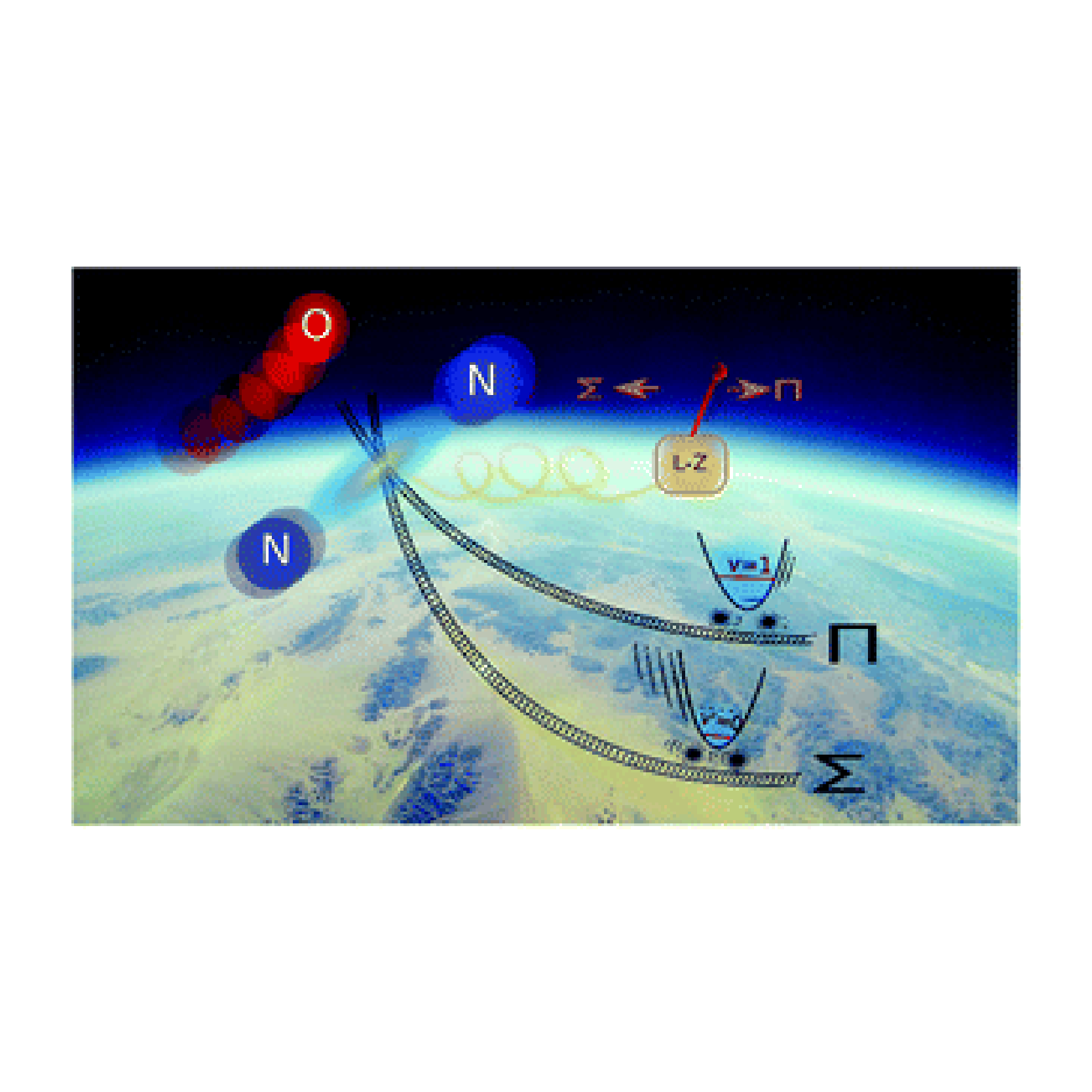
Reconciling experimental and theoretical vibrational deactivation in low-energy O + N2 collisions
Hong, Q., Bartolomei, M., Esposito, F., Sun, Q., Pirani, F.
Molecular dynamics calculations of inelastic collisions of atomic oxygen with molecular nitrogen are known to show orders of magnitude discrepancies with experimental results in the range from room temperature to many thousands of degrees Kelvin. In this work, we have achieved an unprecedented quantitative agreement with experiments even at low temperature, by including a non-adiabatic treatment involving vibronic states on newly developed potential energy surfaces. This result paves the way for the calculation of accurate and detailed databases of vibrational energy exchange rates for this collisional system. This is bound to have an impact on air plasma simulations under a wide range of conditions and on the development of Very Low Earth Orbit (VLEO) satellites, operating in the low thermosphere, objects of great technological interest due to their potential at a competitive cost.
| ID | 461086 |
|---|---|
| DOI | 10.1039/d1cp01976g |
| PRODUCT TYPE | Journal Article |
| LAST UPDATE | 2022-04-11 |

